
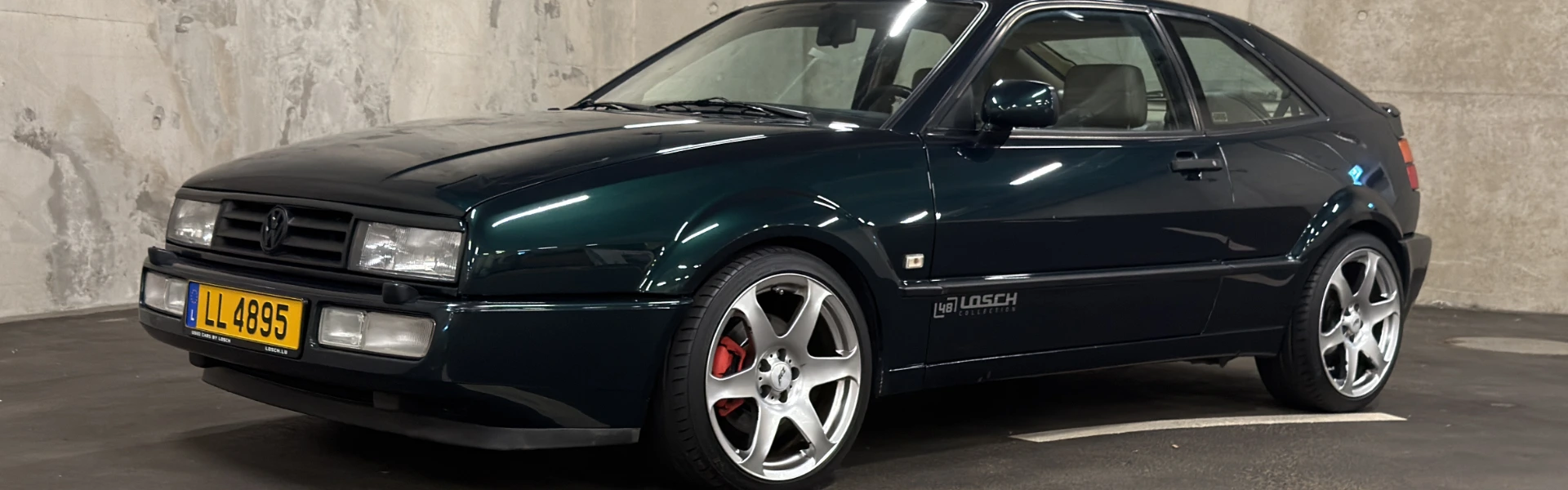
VW Corrado VR6
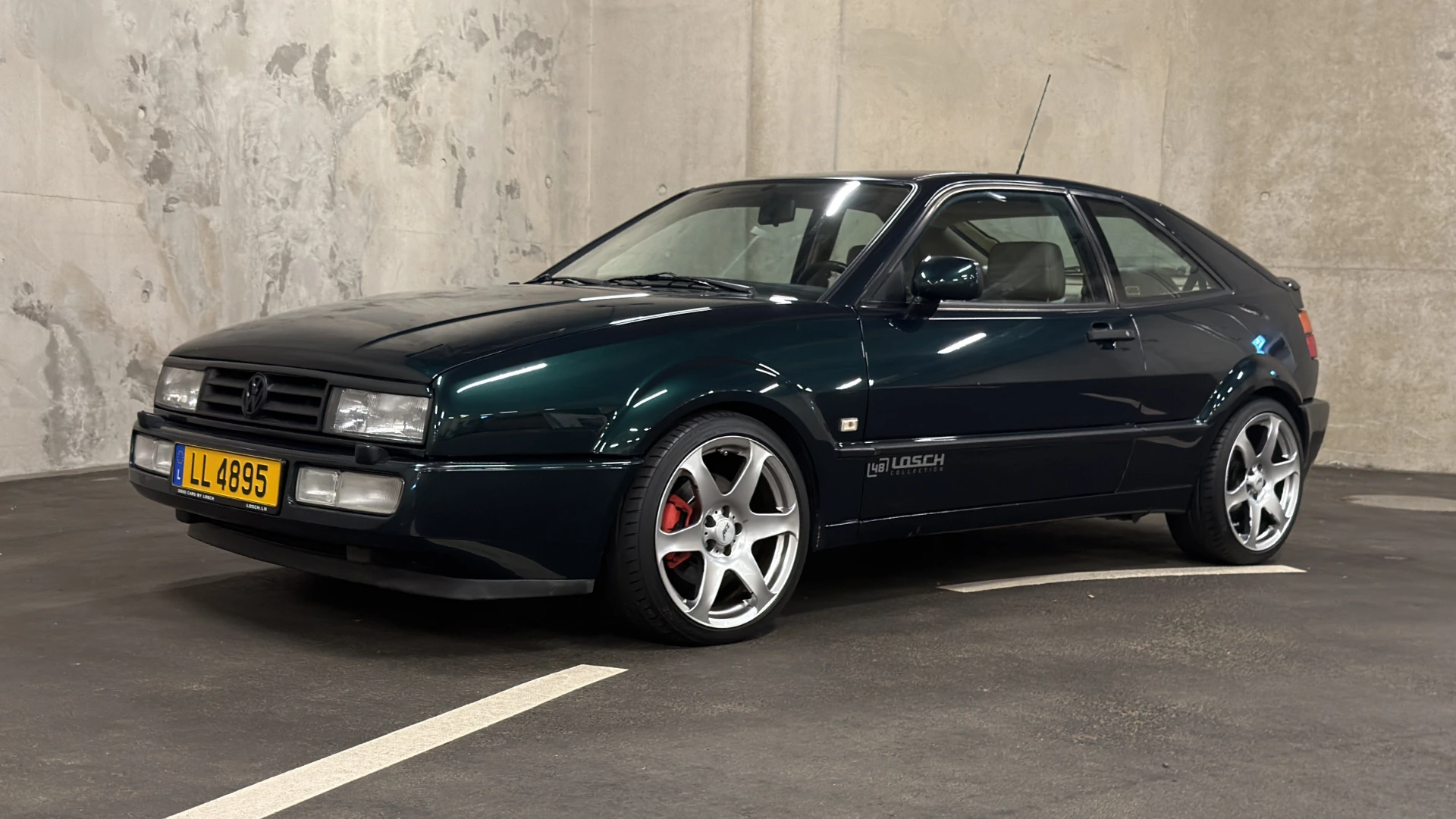
Origin and concept: From the successor to the Scirocco to the independent sports coupe
The development of the Corrado began in 1981 under the internal code EA 494.Originally, it was intended to replace the Scirocco II while technically based on the Golf II.
But as the development progressed, its positioning changed: the Corrado became a more upscale, more sophisticated sports coupe, to the point that the Scirocco II finally continued to be produced in parallel until 1992.
As with the Scirocco, the production of the Corrado was entrusted to Karmann in Osnabrück, renowned for its high-quality manufacturing.
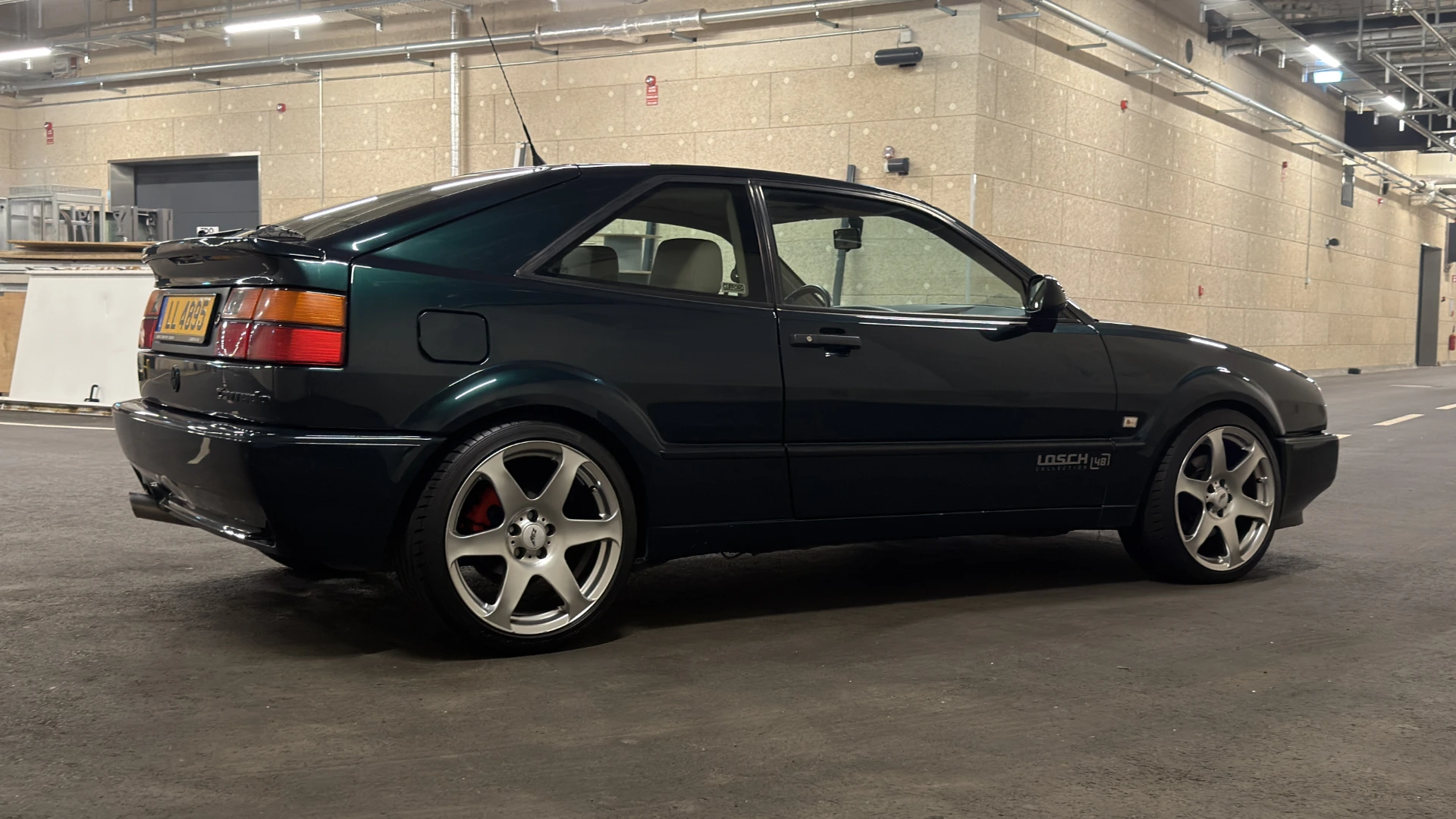
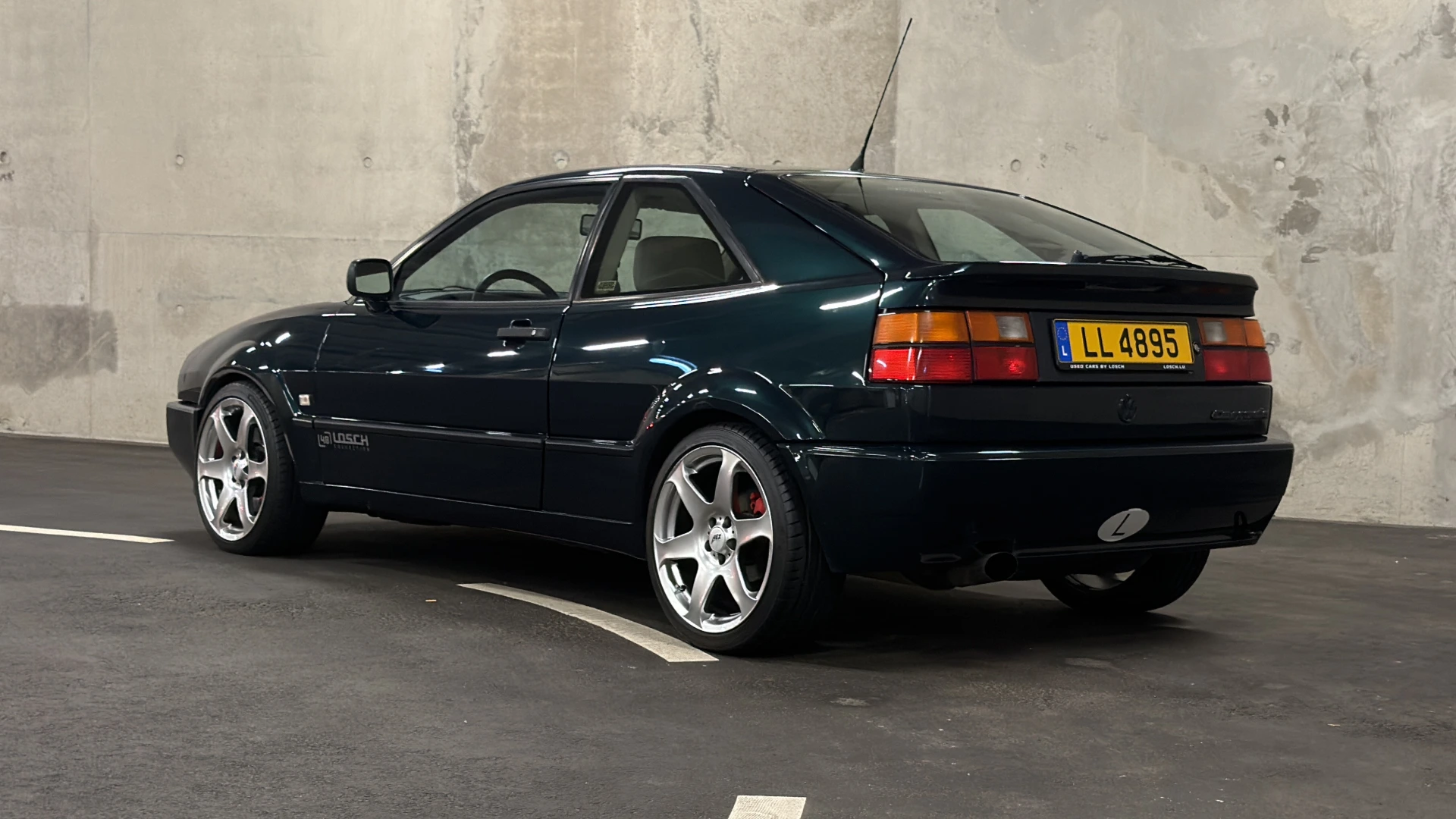
When it was presented in the autumn of 1988, the Corrado was unveiled as a compact 2+2 coupé with a dynamic design. One of its most notable features was the retractable rear spoiler, which automatically deployed at speeds above 120 km/h to reduce lift on the rear axle by up to 64 per cent – an innovation that was far ahead of its time.
At the same time, the coupé offered great practicality thanks to its tailgate and a boot volume of 300 litres.
The arrival of the VR6: a technical reorientation from the 1992 model year
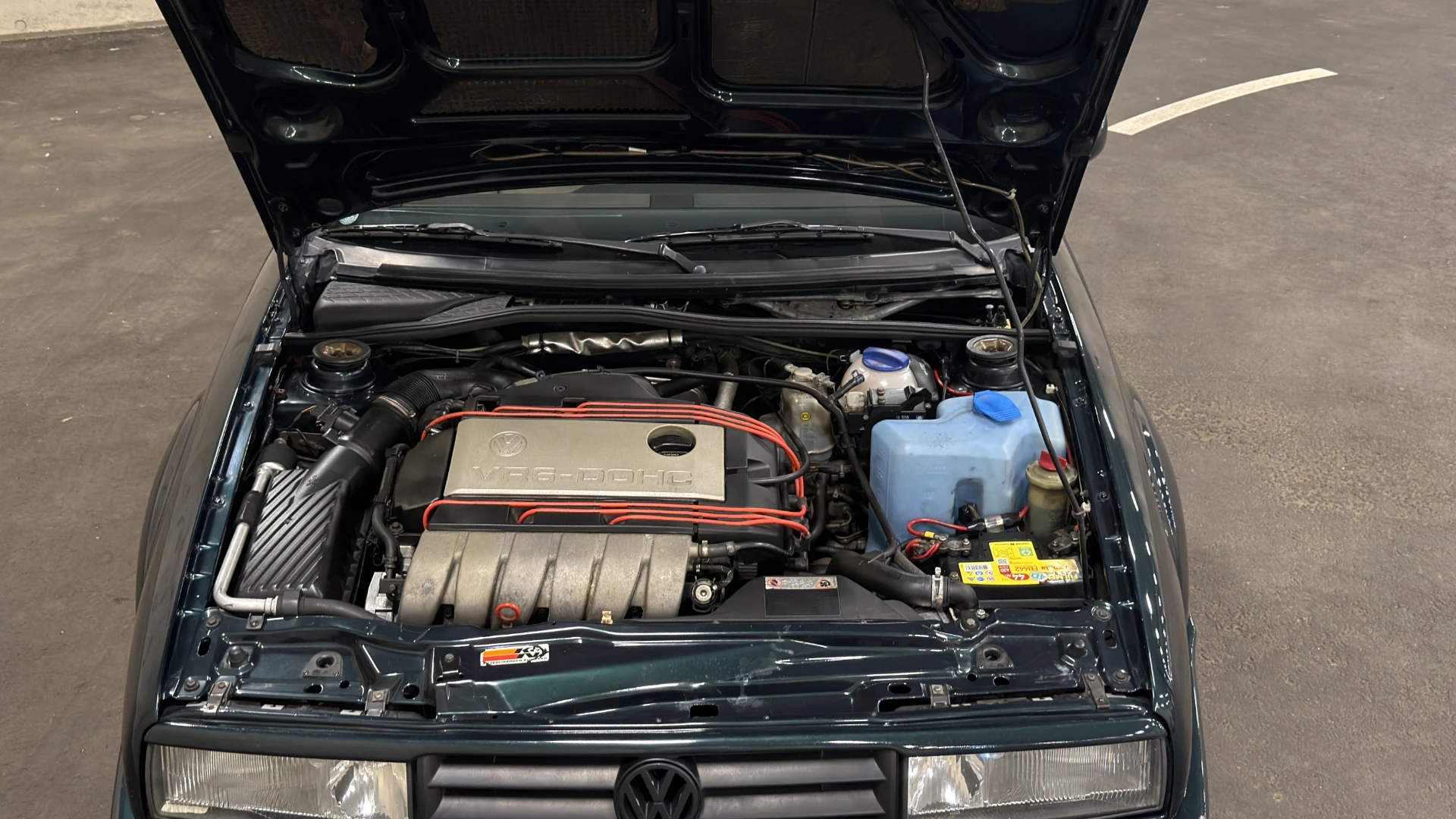
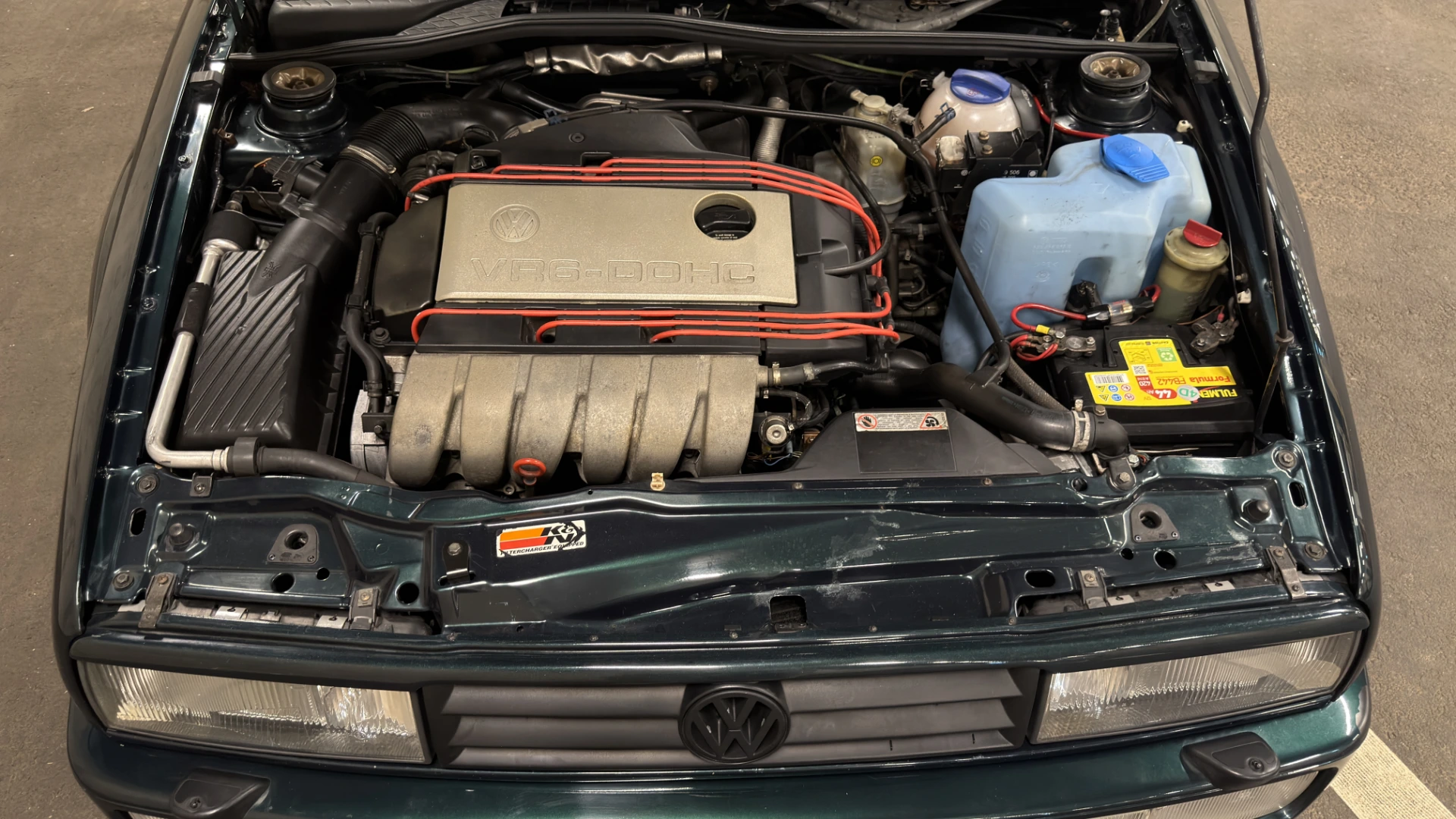
In its early years, the Corrado was offered with the G60 supercharged engine, and later also with 16-valve blocks. But the real revolution came with the 1992 model year: the introduction of the VR6 engine.
To integrate this wide but compact transverse six-cylinder engine, Volkswagen had to profoundly modify the structure of the vehicle:
• New front cradle
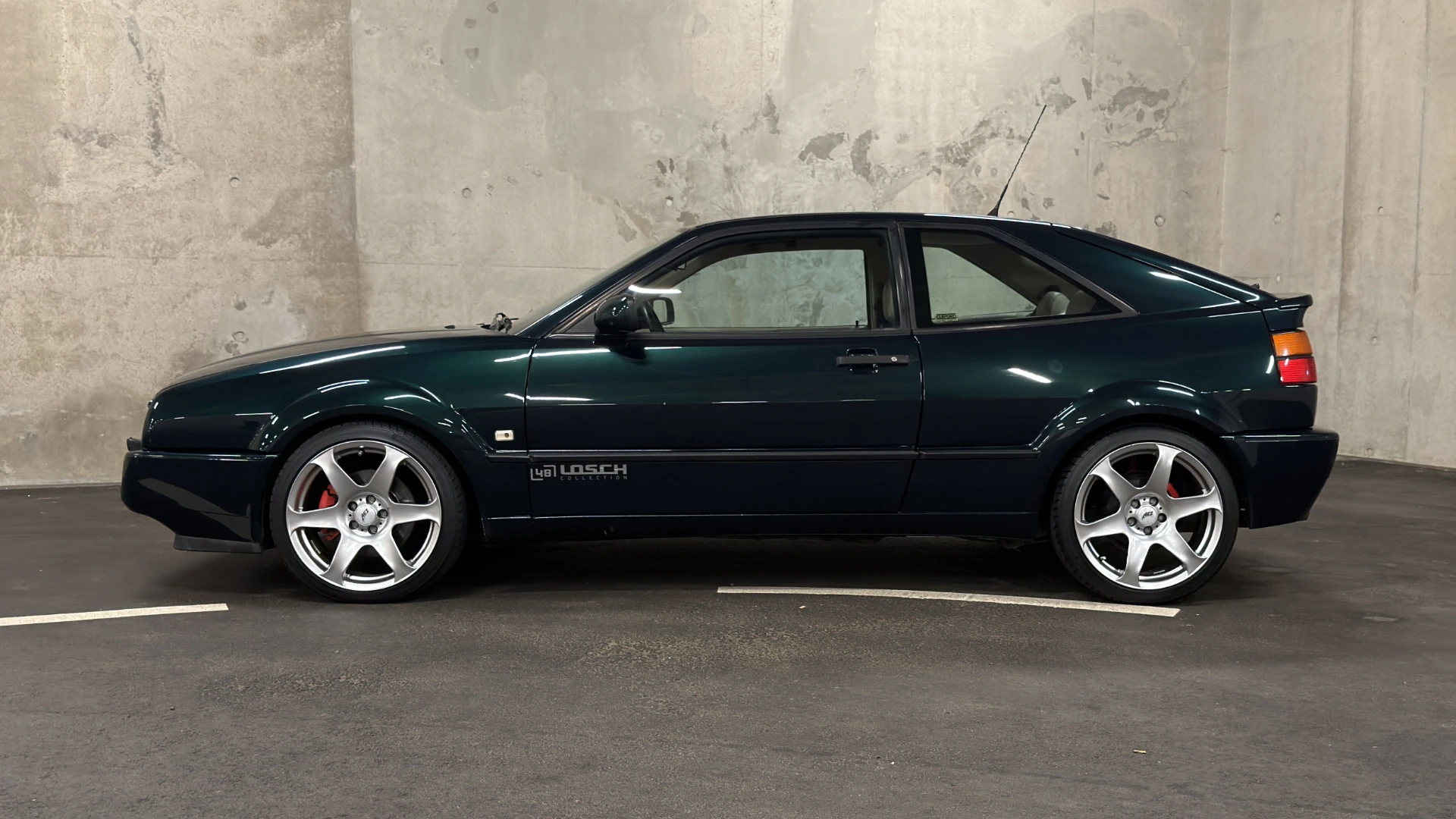
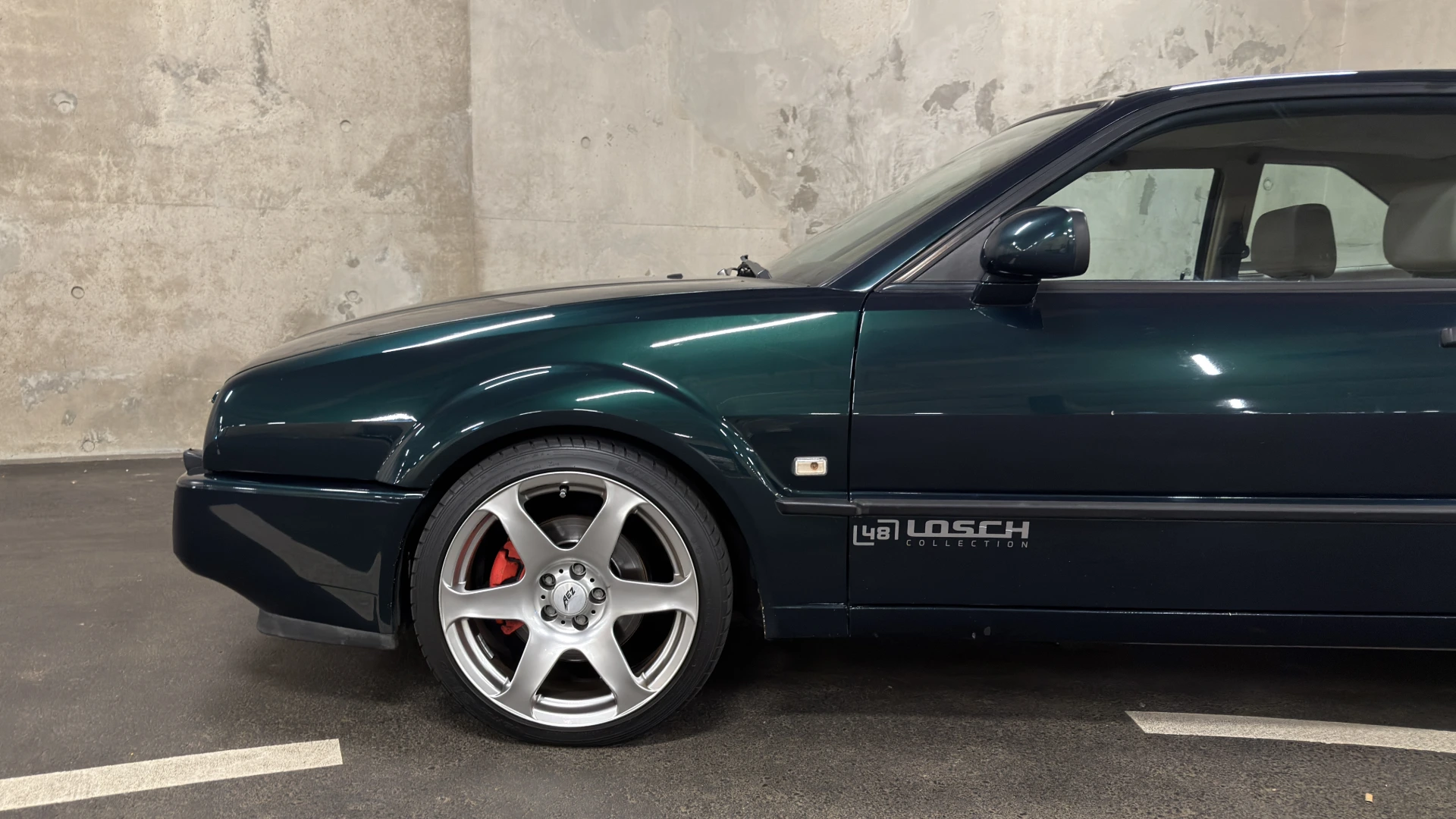
• Widened wings
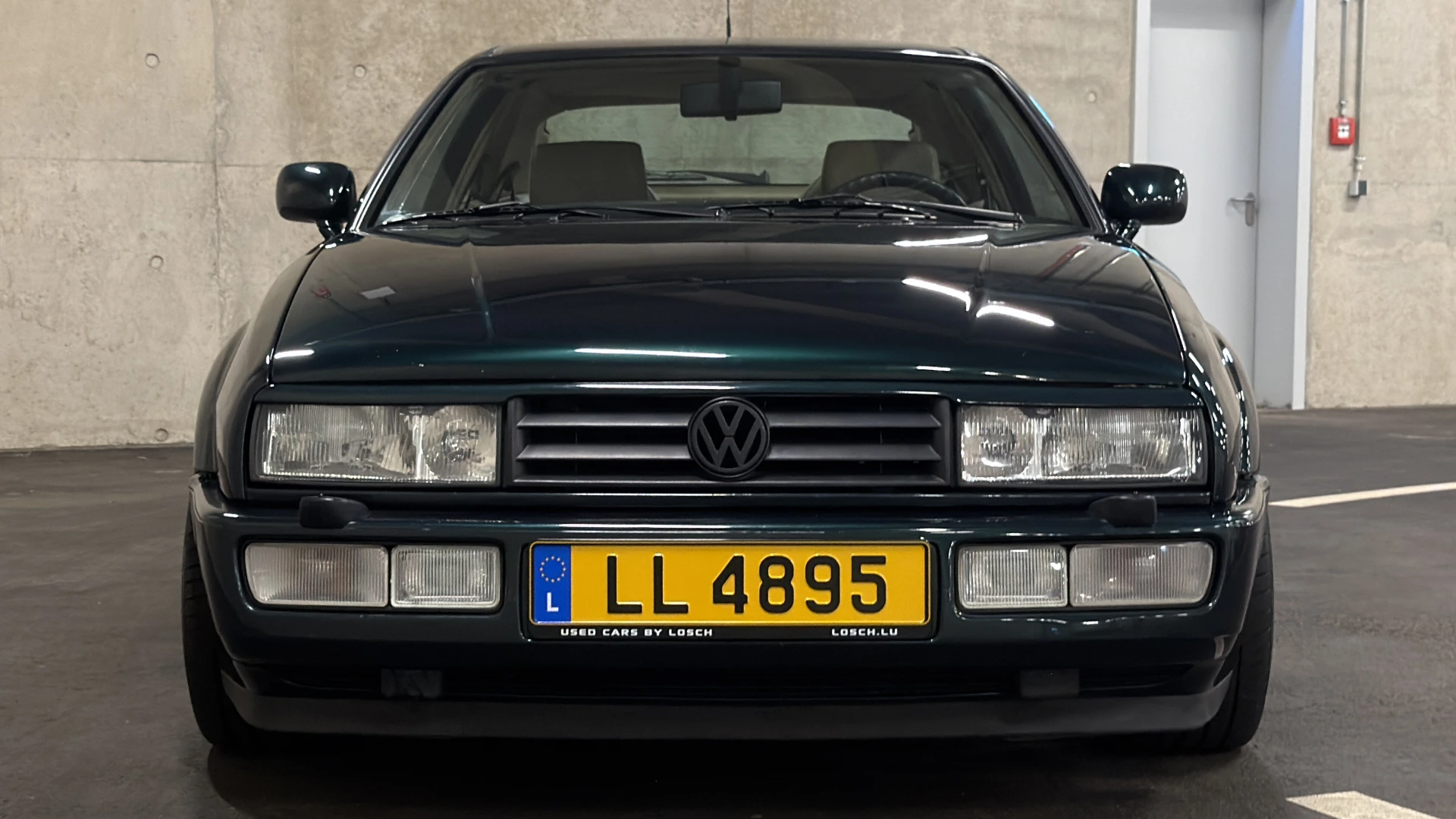
• New Advanced Headlights
• Redesigned hood with characteristic bulge ("Power Dome")
• Reworked front bumper and grille
• 70 litre tank (instead of 55 l)
• boot reduced to 235 litres
• introduction of the PLUS chassis, adapted to the weight and higher power of the VR6 engine
With the VR6, the Corrado definitively moved up to a higher category and became one of the most technically sophisticated models in the Volkswagen catalogue.
The VR6 in detail: technique, performance and character
-
Technical Details
Displacement: 2,861 cc
Power: 190 hp at 5800 rpm
Torque: 245 Nm at 4200 rpm
Gearbox: 5-speed manual
-
Performance and Character
0–100 km/h: 6.9 s
Max. speed: 235 km/h
Curb weight: approx. 1,260–1,285 kg
-
Sound and Smoothness
Unique sound
Smoothness of an in-line six-cylinder
Evolution of the interior before 1995
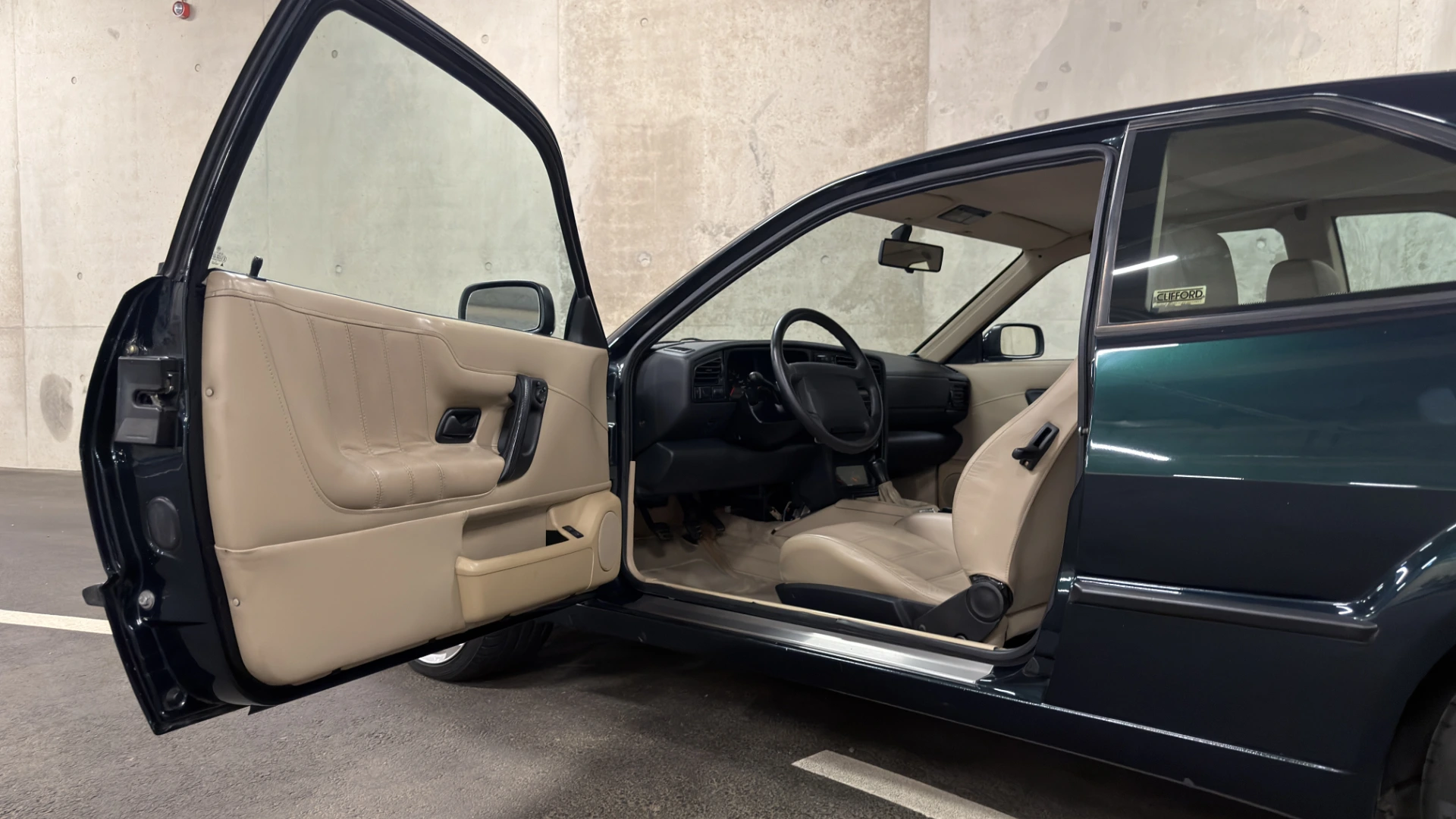
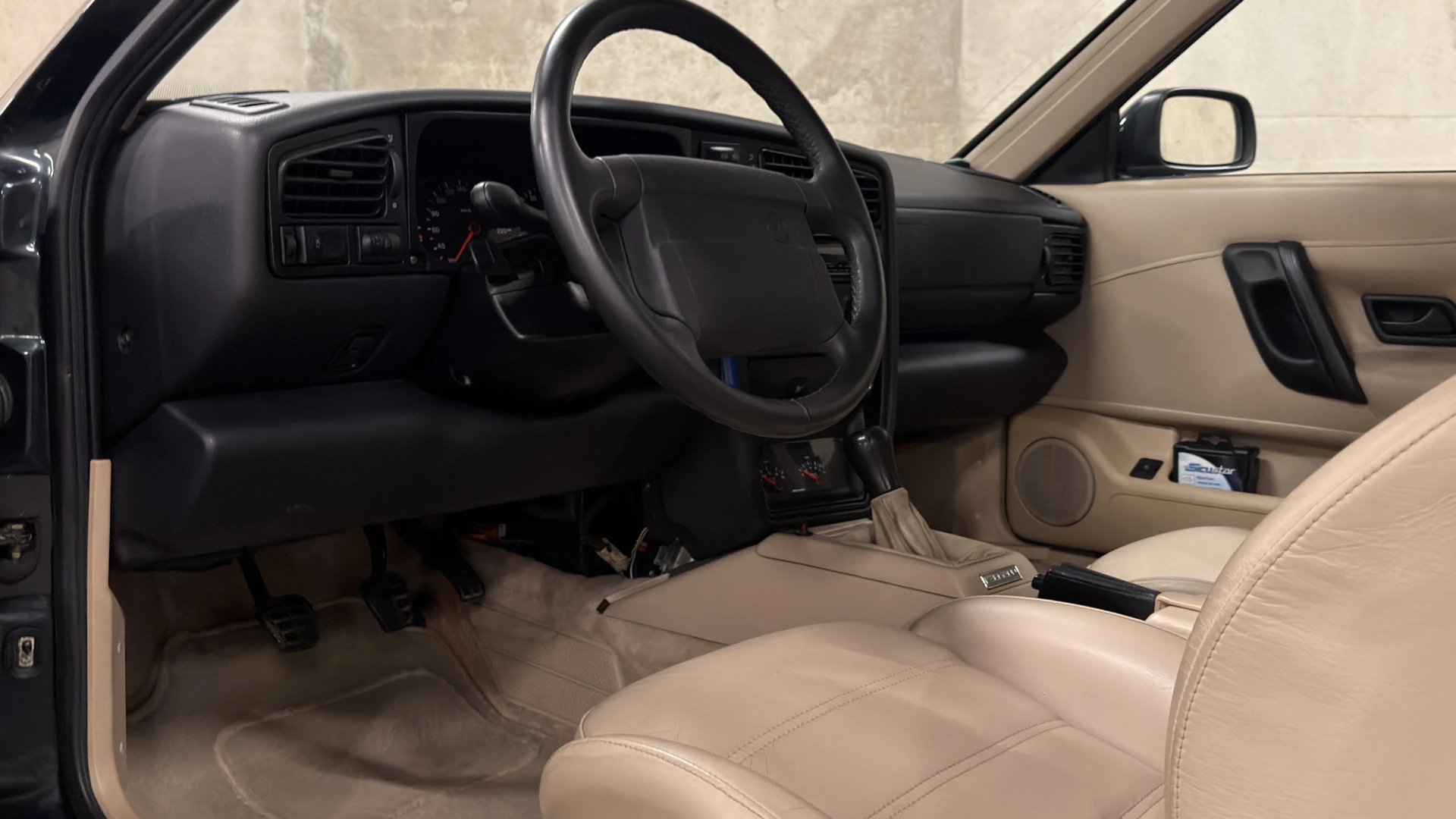
Before the 1995 vintage, the Corrado benefited from a major interior update. From August 1992, the driver's seat was modernised:
• Redesigned centre console
• New door panels and new control positions
• Heating controls with knobs instead of sliders
• new instrument typography, red hands, Corrado logo in the rev counter
• split rear seats now standard only on the VR6
Thus, in the 1995 vintage, the Corrado was completely modernized, both technically and visually.
The 1995 vintage: the final and most accomplished version
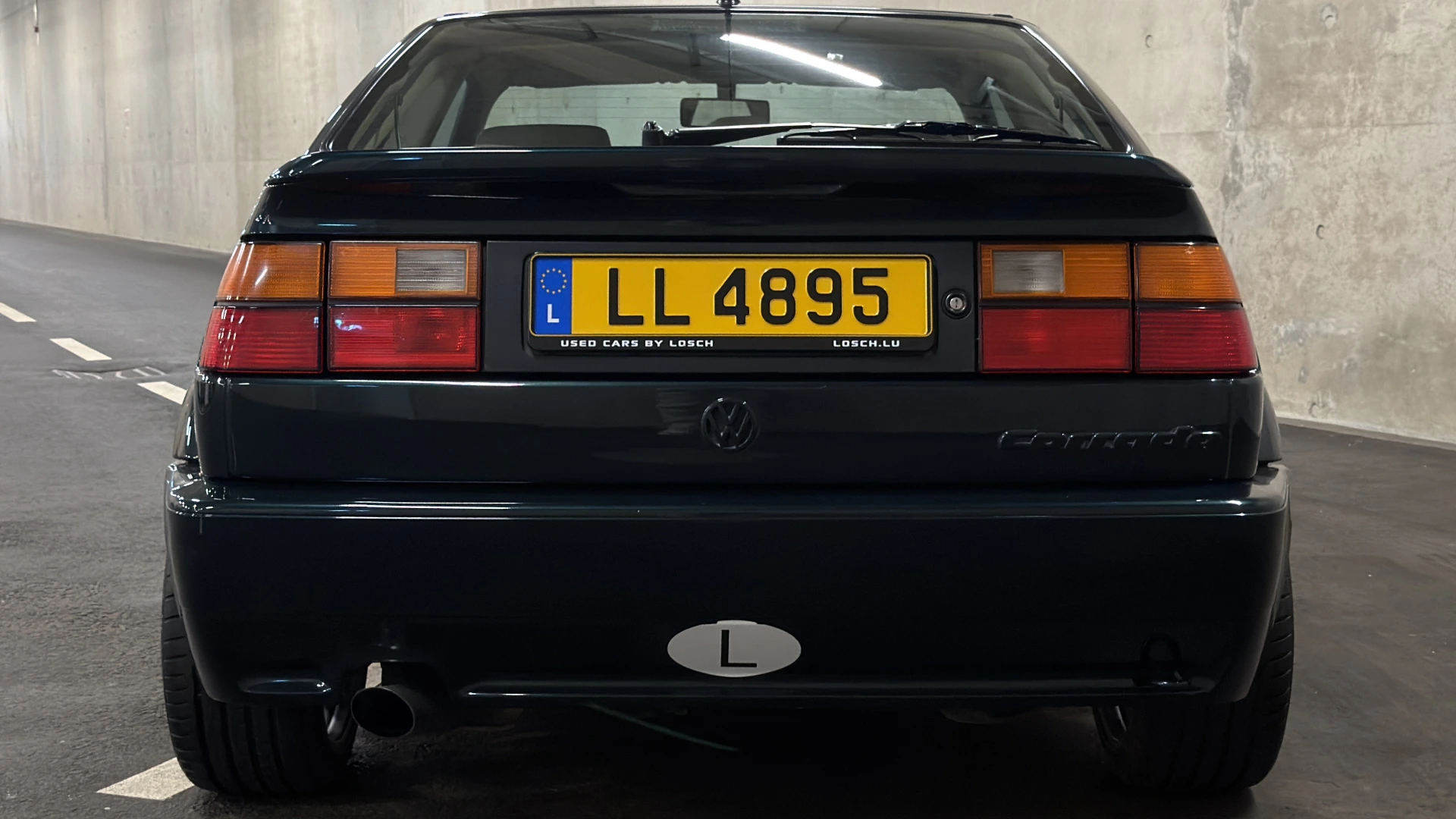
The year 1995 marked the end of production of the Corrado – "Adiós, corredor!" as Volkswagen wrote.The VR6 was then thetop of the range and the most successful version.
The VR6 of the 1995 model year benefited from all the accumulated evolutions:
• PLUS chassis perfectly mastered
• reinforced front thanks to the VR6 specific cradle
• Optimised interior ergonomics
• Improved electricity and ventilation
• EDS (Electronic Differential Lock) as standard for better traction
• Modernized front/rear design (restyling from 1992)
The 1995 VR6 was therefore a technically mature sports coupe, capable of outperforming many competitors while maintaining Volkswagen's own great versatility.
Handling and character: a sporty coupé that has become a cult
The Corrado VR6 was often rented for:
• its agile, neutral to slightly oversteer behavior
• its powerful, smooth and unmistakable VR6 engine
• its solid and careful workmanship by Karmann
• Its ideal balance between sportiness and everyday use
At the time, the trade press often called it the best front-wheel drive on the market, not least because of its high stability at high speeds – to which the automatic rear spoiler contributed.
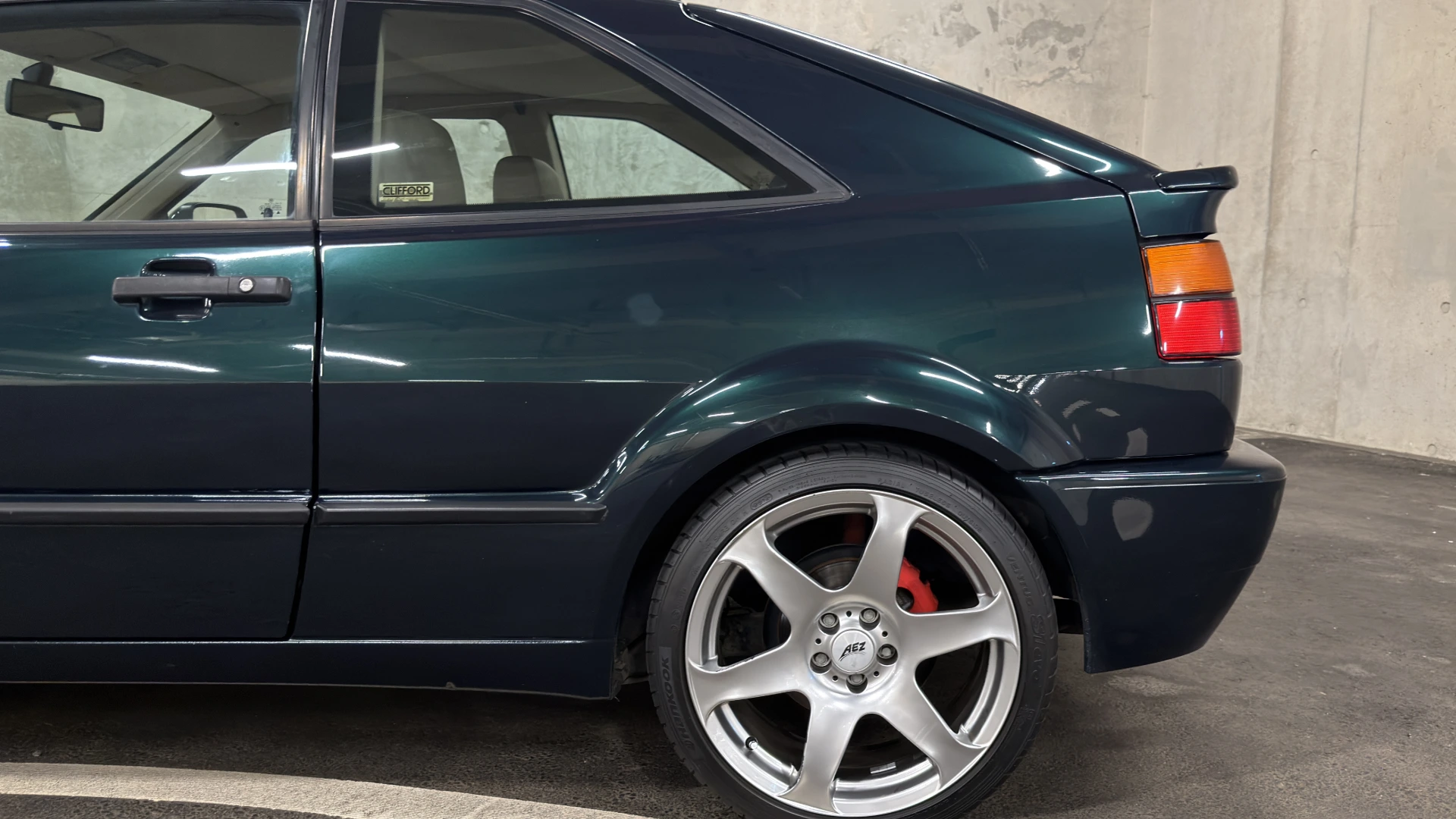
End of production in 1995: a short but brilliant career
Production of the Corrado officially ended on July 6, 1995. Reasons included:
• High production costs due to assembly at Karmann
• positioning too premium for traditional VW customers
• A market that prefers larger, more practical vehicles
The Corrado was never a model of mass distribution; but that's precisely what makes it a sought-after classic today, especially in VR6 version.
Conclusion
The VW Corrado VR6 (model year 1995) represents the pinnacle of the entire series: a technically accomplished, visually distinctive model powered by one of the most iconic engines in VW history.
Hand-assembled at Karmann, it was more of an automotive statement than a mass-market model, a sporty coupe ahead of its time that still retains a loyal and enthusiastic community of enthusiasts today.