
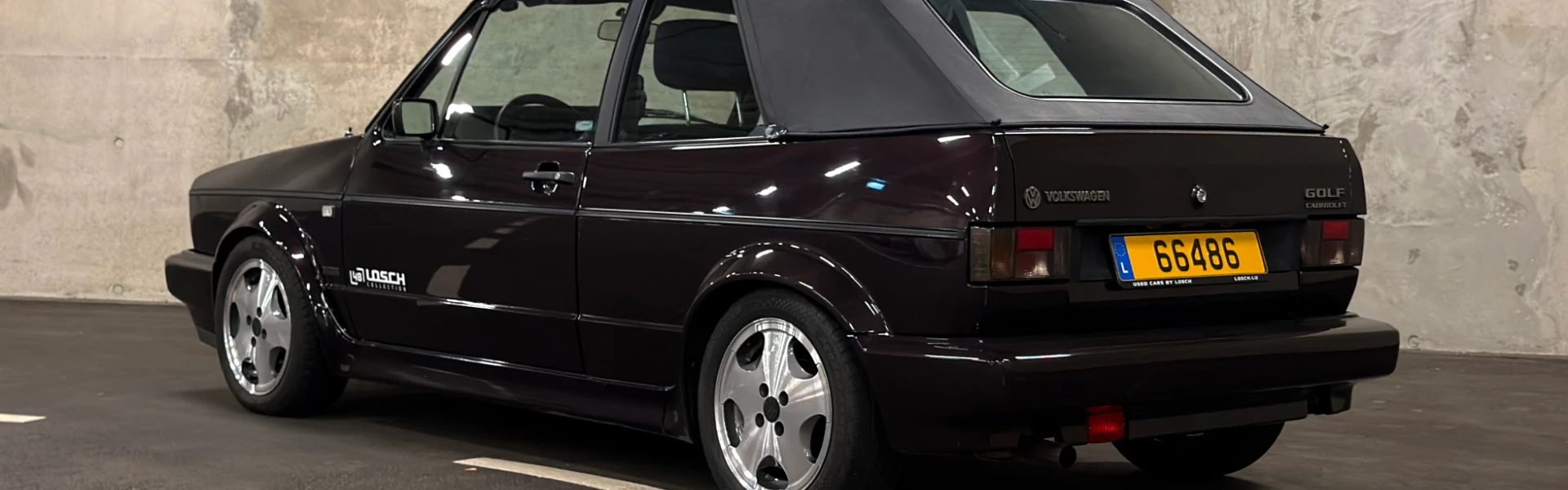
VW Golf Cabrio
Introduction: The Golf convertible, heir to the Beetle
When Volkswagen started production of the Golf Cabriolet at Karmann in Osnabrück in February 1979, the goal was clear: to succeed the legendary Beetle Cabriolet – which it achieved with impressive success.
The reinforced bodywork, featuring the famous fixed roll bar, improved both safety and torsional rigidity, giving the convertible its iconic appearance.
The model quickly became a cult car and remained offered almost unchanged until 1993.
The GLI: the sportiest version of the Golf Cabriolet
-
Engine
The GLI was equipped with a 1.6-litre GTI engine with 110 hp.
-
Chassis and Suspension
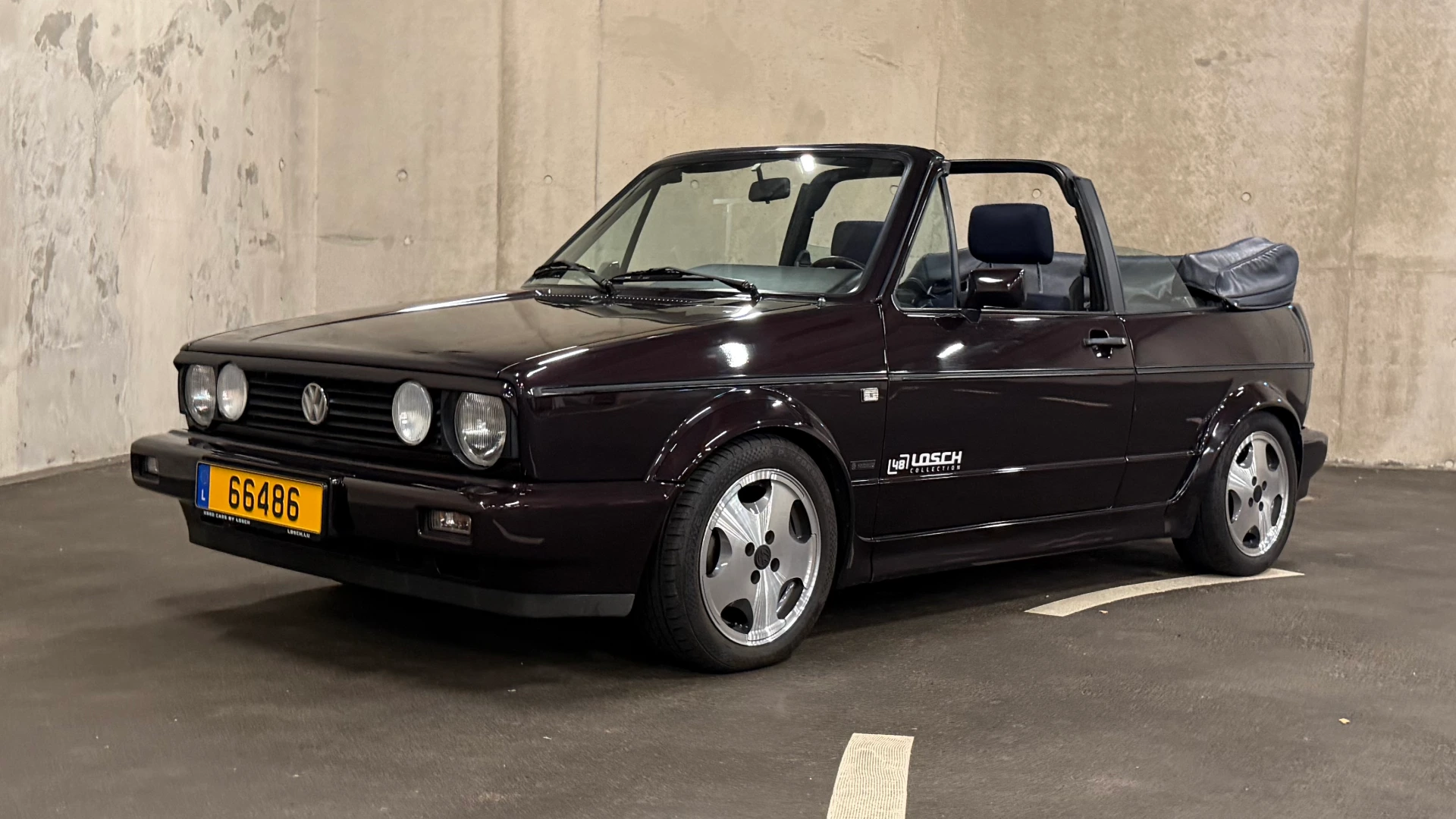
The GLI received a firmer chassis and slightly wider fenders, giving it an athletic look.
-
Features
Typical features of the first GLI included: 1.6-litre GTI engine (110 hp), Bosch KJetronic injection, sportier suspension, wider tyres & discreet widenings, and a resolutely sporty positioning compared to the GL/GLS.
-
First Year
The GLI was introduced in 1979 with its first year of production.
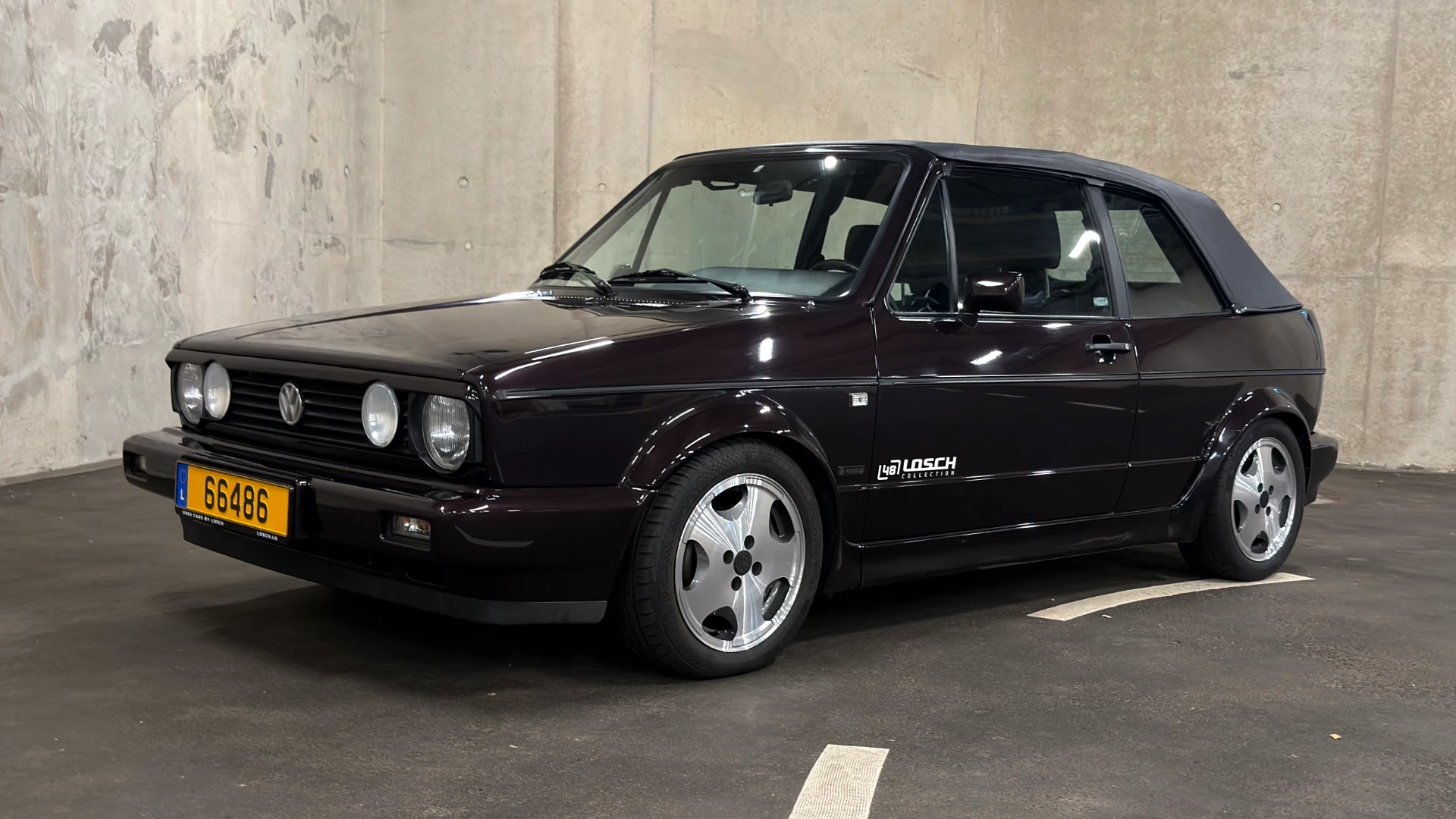
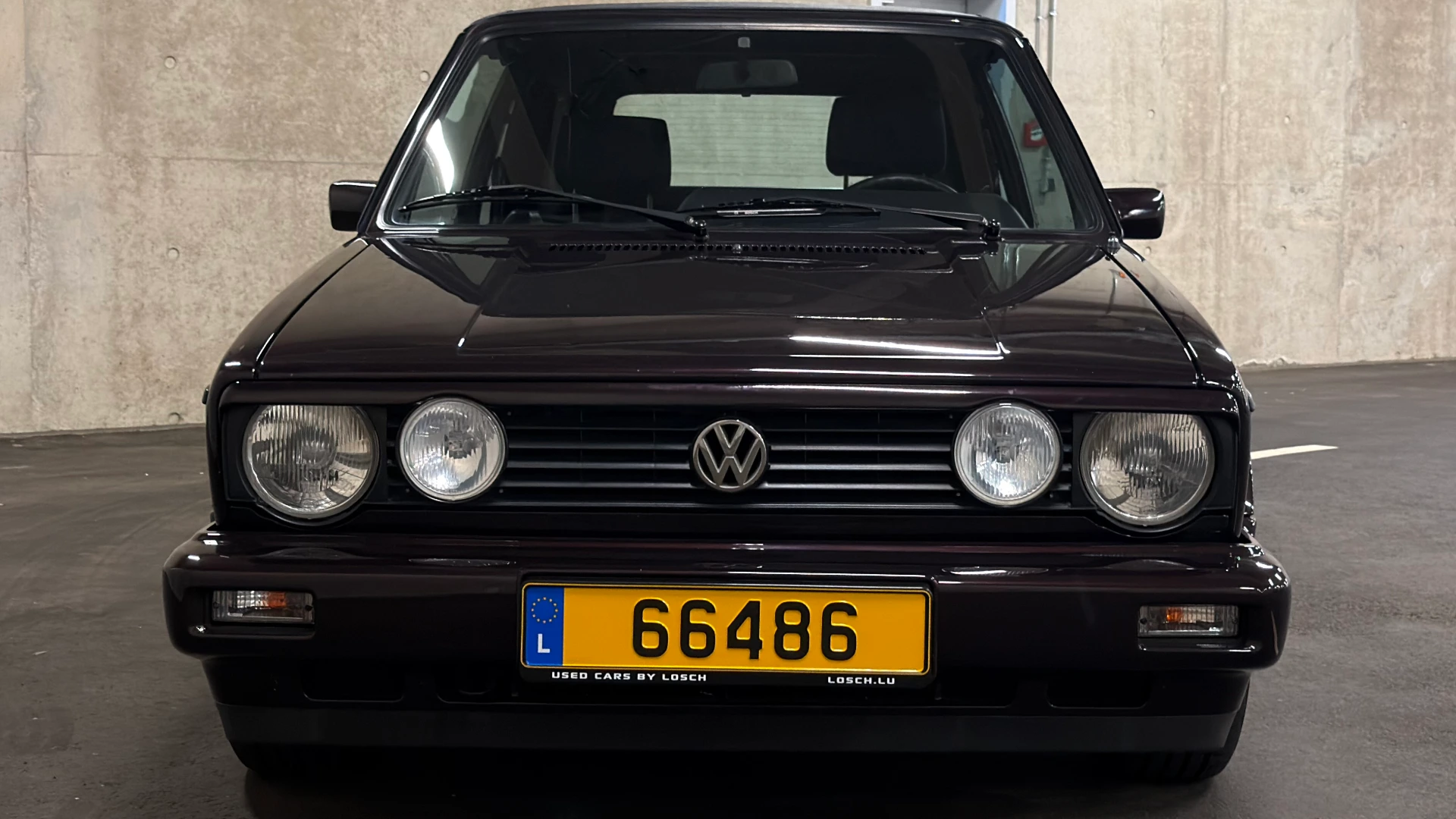
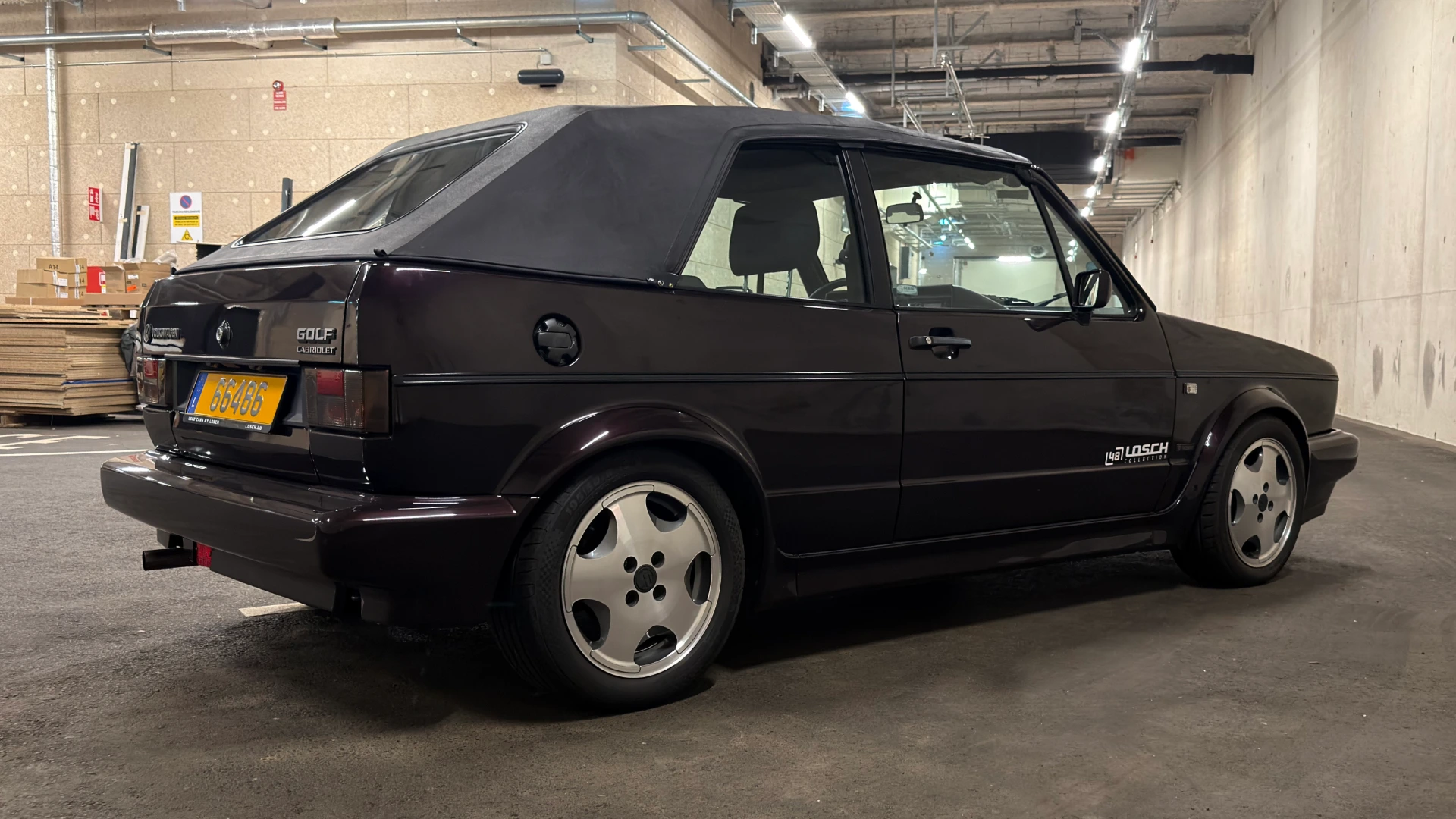
Evolution of the model and technical progress
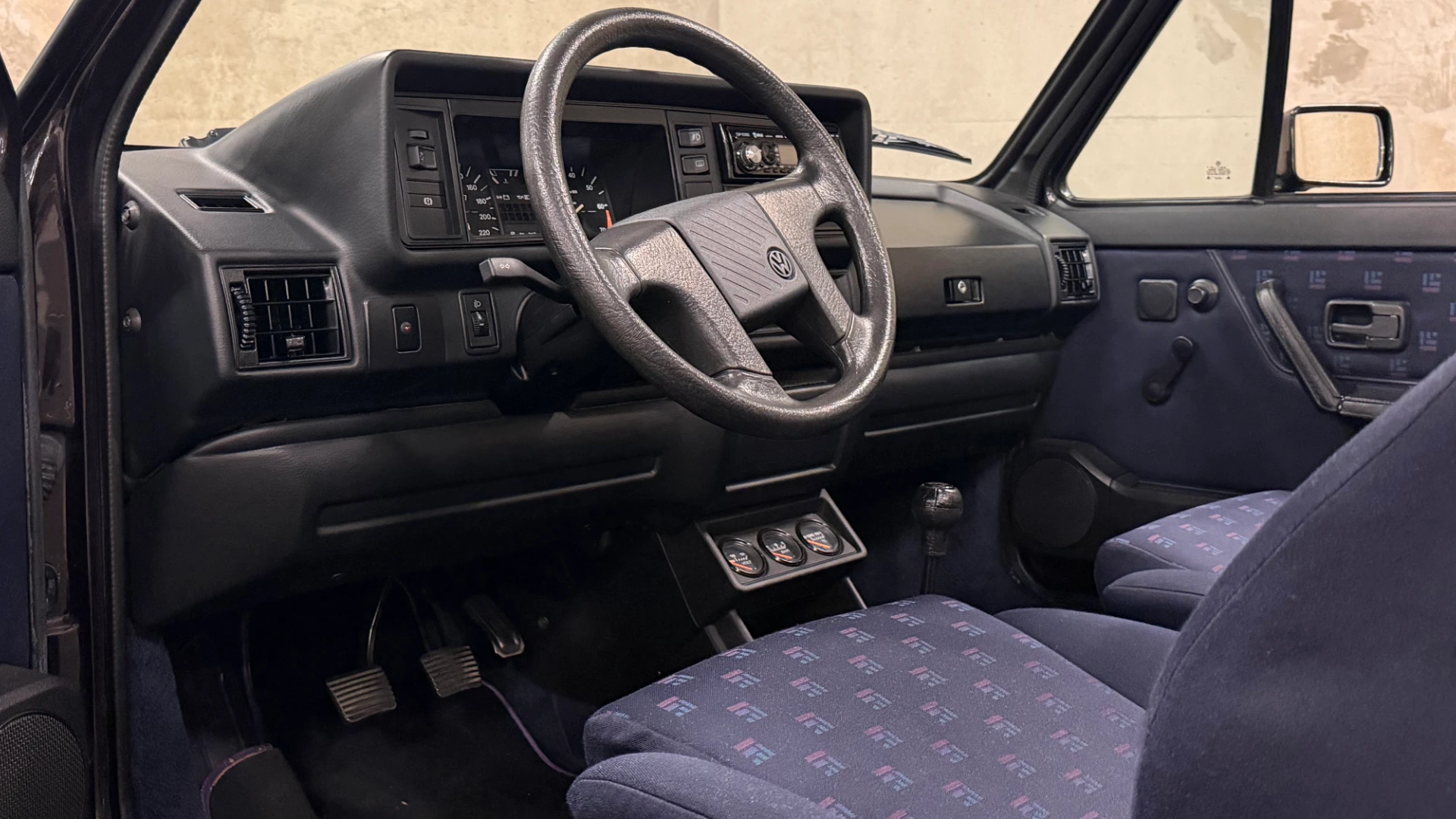
During the 1980s, Volkswagen gradually developed the convertible. In 1980, the interior adopted the angular and more modern dashboard of the sedan.
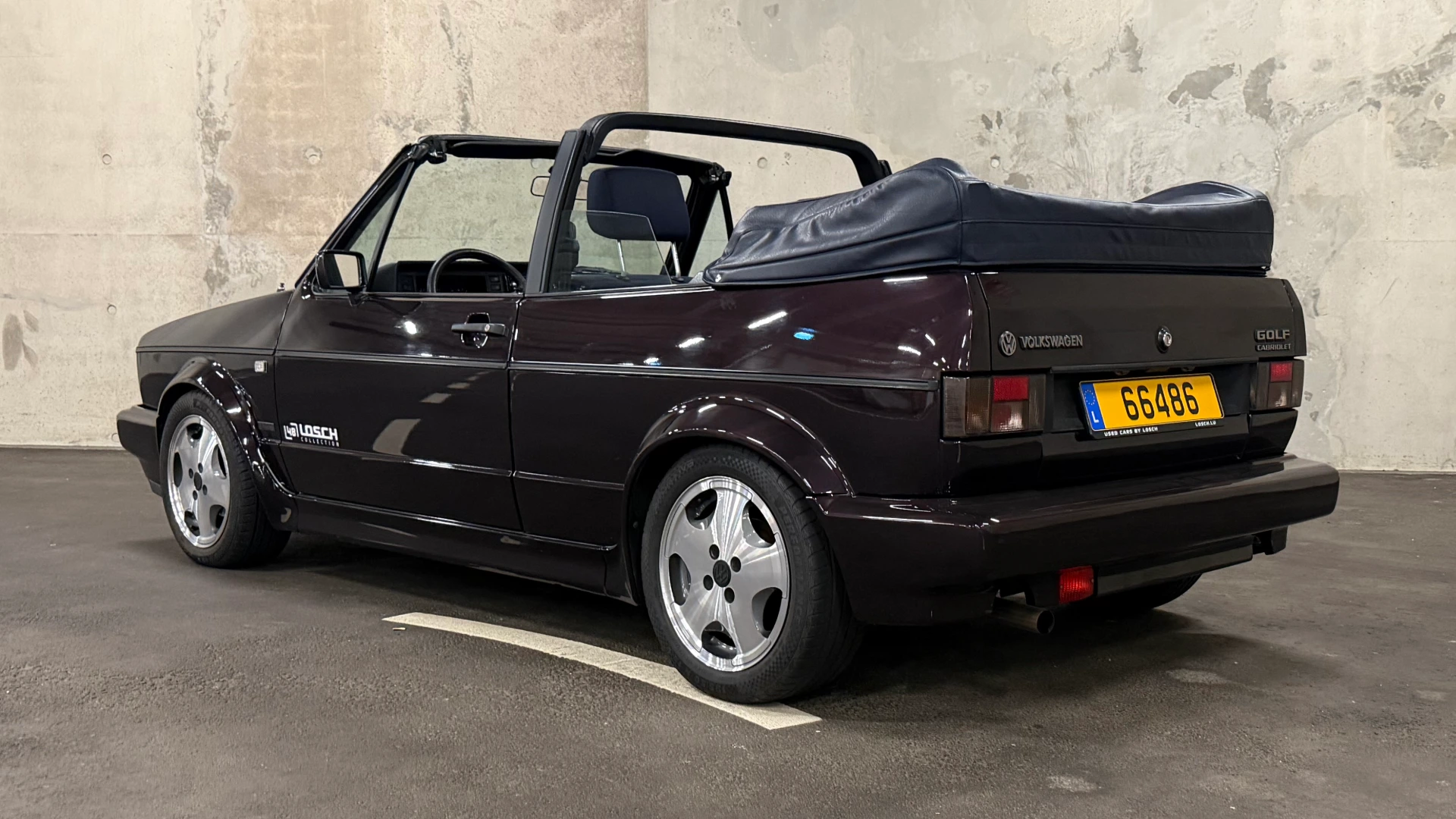
In 1981, the soft top was revised to fold more flat, greatly improving rear visibility – an advantage that also benefited the GLI.
In 1982, a major change took place: the GLI adopted the new 1.8-litre long-stroke engine with 112 hp, offering a better range of use and more in line with its sporty character.
The GLI thus became the convertible equivalent of the GTI, but with four seats fully usable.
Performance and character of the 1.8 GLI (1983–1987)
-
Performance
112 hp & 157 Nm; 0–100 km/h in approx. 9.8 sec; Maximum speed approx. 173 km/h
-
Weight and Handling
Weight approx. 965 kg, which made it lively and light
Aesthetic modifications and final years of production
For most of its production, the Golf Cabriolet retained its classic appearance, until the major restyling of 1989.De new wide bumpers, matching fender flares and new rocker panels gave it a more modern and robust look.
Over the years, technical details were also reviewed:
• Modernisation of the electricity system
• Larger capacity tank
• Introduction of engines with catalytic converters (set or not)
Robust, but with some weak points
-
Cooling System Issues
The cooling system is prone to leaks.
-
Oil Seal Failures
Some seals in the oil system are known to fail.
-
Hall Sensor Problems
The Hall sensor of the ignition can be capricious at times.
-
Robust Engines
Despite issues, engines like the 1.8-liter blocks are robust and durable.
Rarity and Cult Status of the GLI
Although the Golf Cabriolet was a great commercial success, the GLI is now a real rarity. In collectors' circles, there are only about 157 GLI still registered, a figure that underlines its exclusivity.
Its rarity, combined with its sporty heritage and Karmann build quality, makes the GLI one of the most sought-after convertibles in the Golf range.
Conclusion
-
Model Overview
The Golf 1 Cabriolet GLI combines the freedom of a convertible with the technology and sporty character of the GTI.
-
Historical Significance
Its mix of everyday use, dynamism and typical 80s design still makes it one of the most fascinating models in the history of the Golf – and, thanks to its rarity, a true collector's item.