
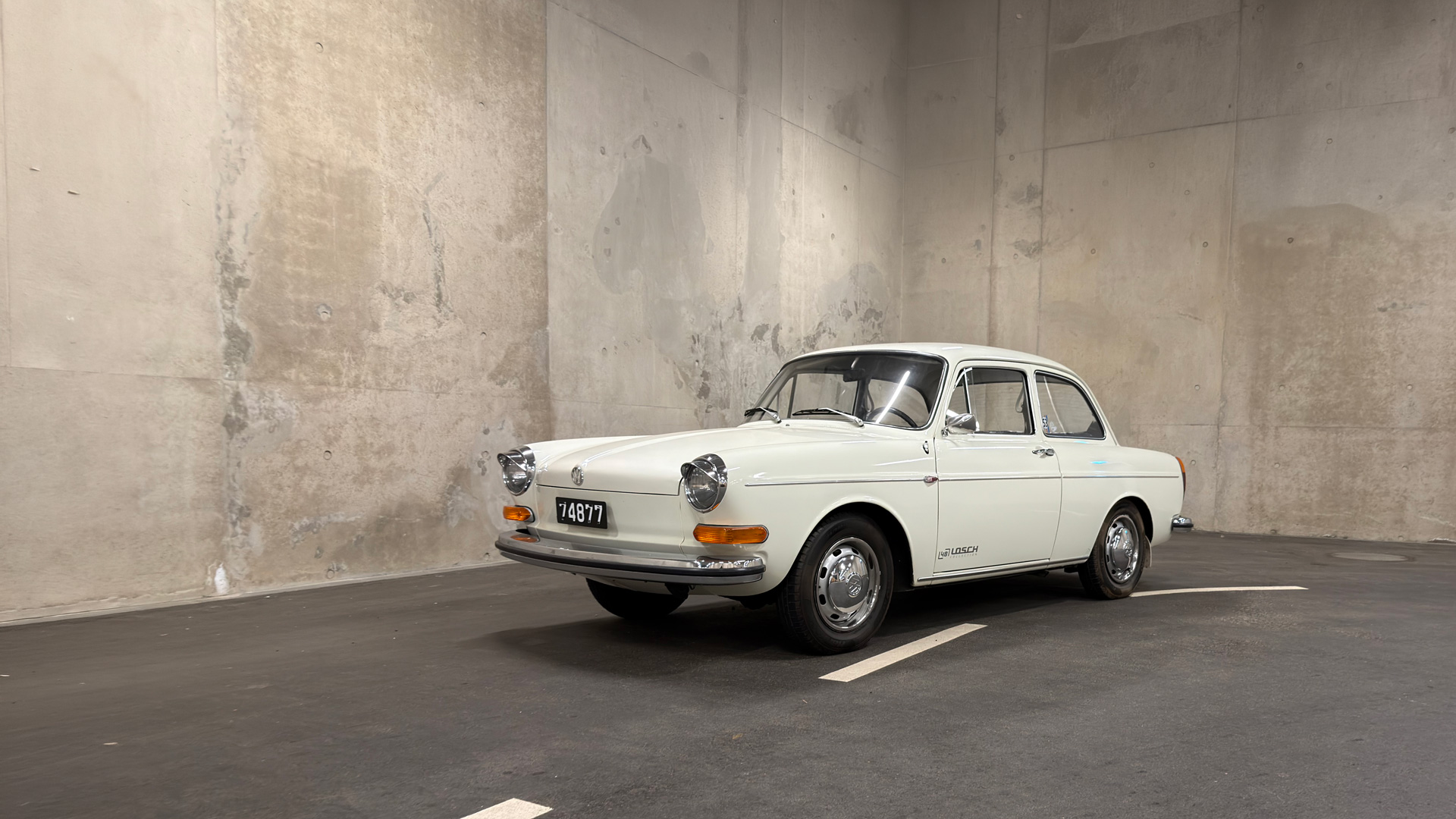
VW Type 3 1600
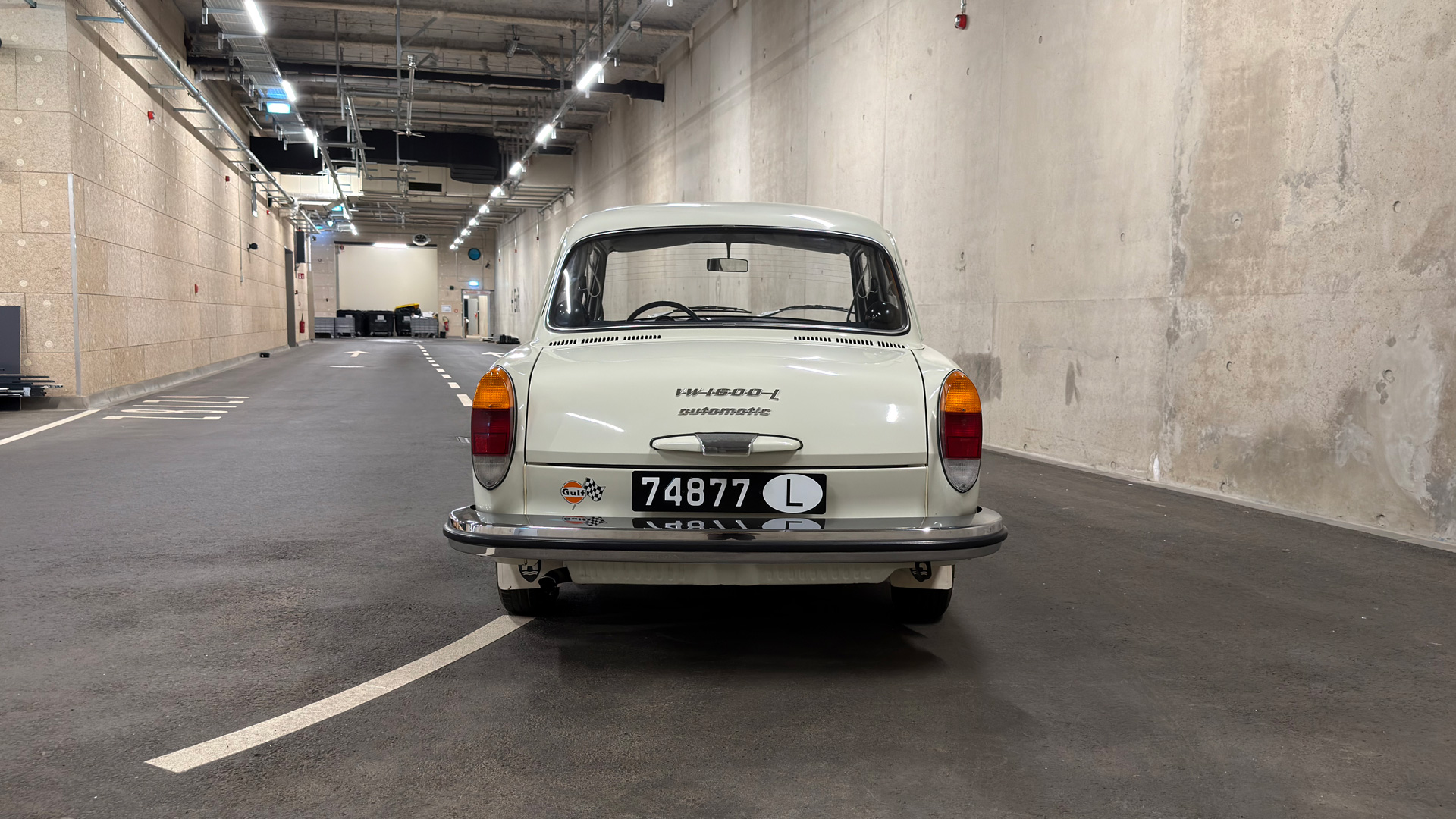
Model Positioning – The Type 3 as Volkswagen's New Midsize Sedan
With the introduction of the Type 3 in 1961, Volkswagen expanded its automotive range beyond the Beetle for the first time. Although technically very close to it, the Type 3 had to appeal to a wider audience thanks to more space, more modern styling and improved comfort.
It was available in:
• classic trunk sedan (Stufenheck),
• fastback sedan (TL – Touren Limousine),
• Variant (break).
The VW Type 3 thus became the brand's first true mid-size segment model – a role that was later taken over by the Passat.
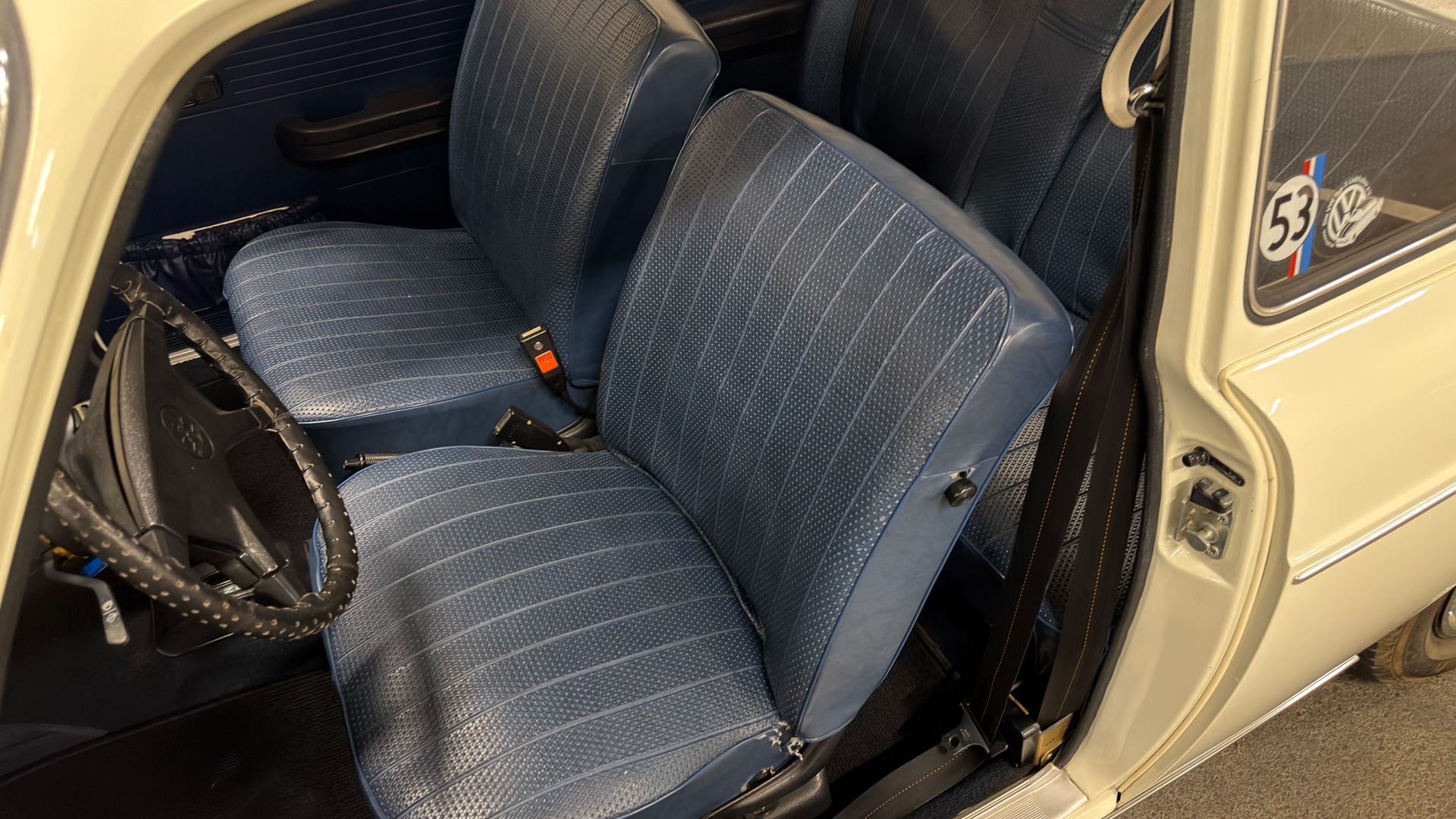
Historical Background – The Volkswagen "Type Family"
Volkswagen numbered its models chronologically according to their development:
• Type 1: VW Beetle (from 1938)
• Type 2: VW Transporter / Combi (from 1950)
• Type 3: mid-range model (from 1961)
• Type 4: VW 411 / 412, higher class model (from 1968)
The Type 3 was officially launched on September 7, 1961 after its presentation at the 40th Frankfurt Motor Show (IAA). Until production stopped in July 1973, nearly 2.6 million units were manufactured.
Technology and concept – The Beetle principle, but modernised
-
The basic principle remains: rear engine and air-cooled boxer
The VW Type 3 retains the classic Volkswagen mechanical philosophy:
• air-cooled four-cylinder boxer engine,
• rear engine,
• engine positioned above the gearbox,
• Simple and robust technology.The major innovation lay in the deliberately flat design of the engine, allowing the installation of an additional trunk above the engine.
-
Two chests – a special feature of the model
As on the Beetle, the main trunk was located at the front. In addition, the Type 3 offered a second luggage compartment in the rear, accessible from the outside – a notable gain in practicality.
-
Serviceability
For maintenance, the engine was accessible through a hatch in the floor of the rear trunk – a rare solution at the time but particularly ingenious.
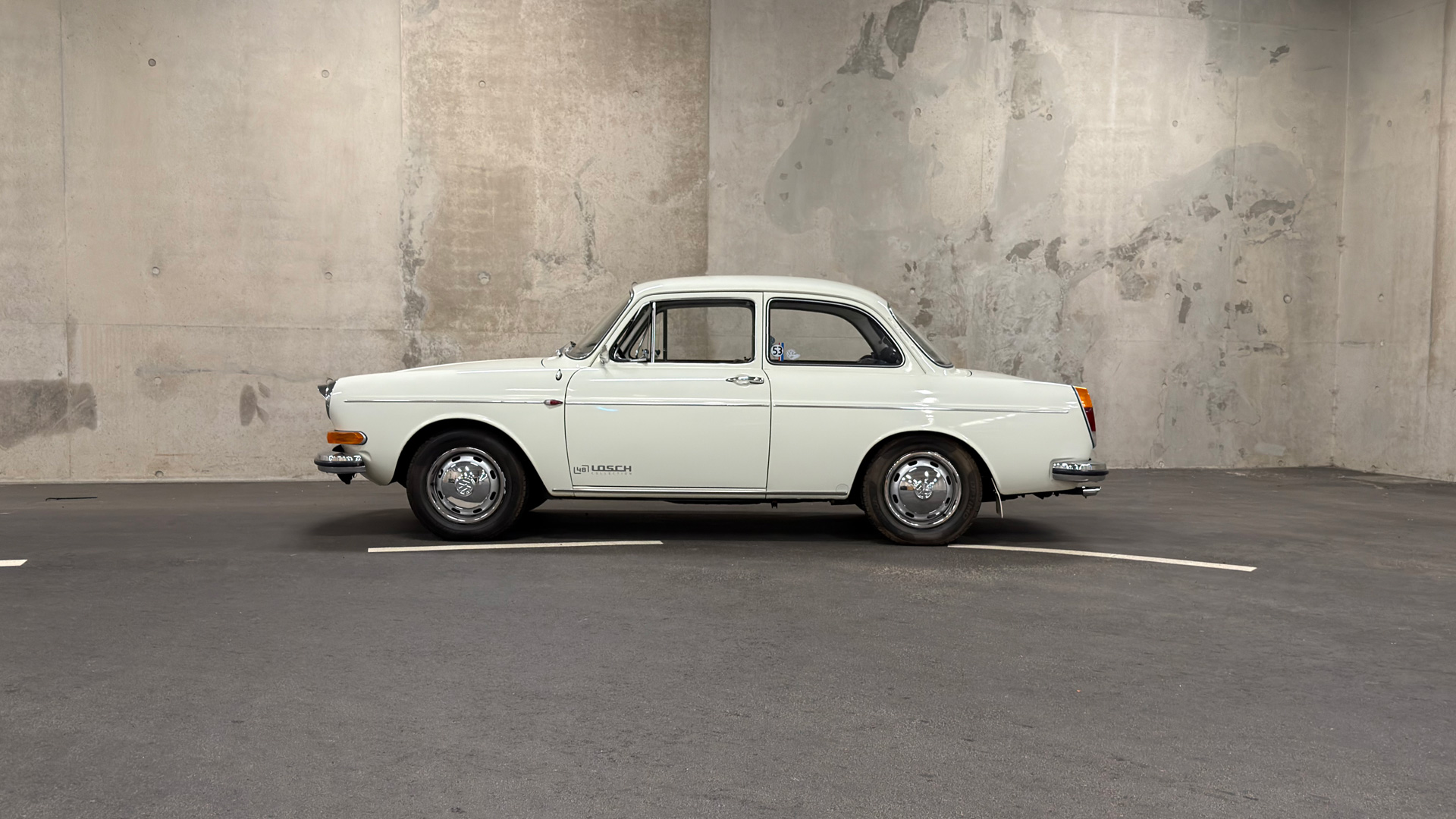
Technical innovations – Type 3 as a vector of progress
-
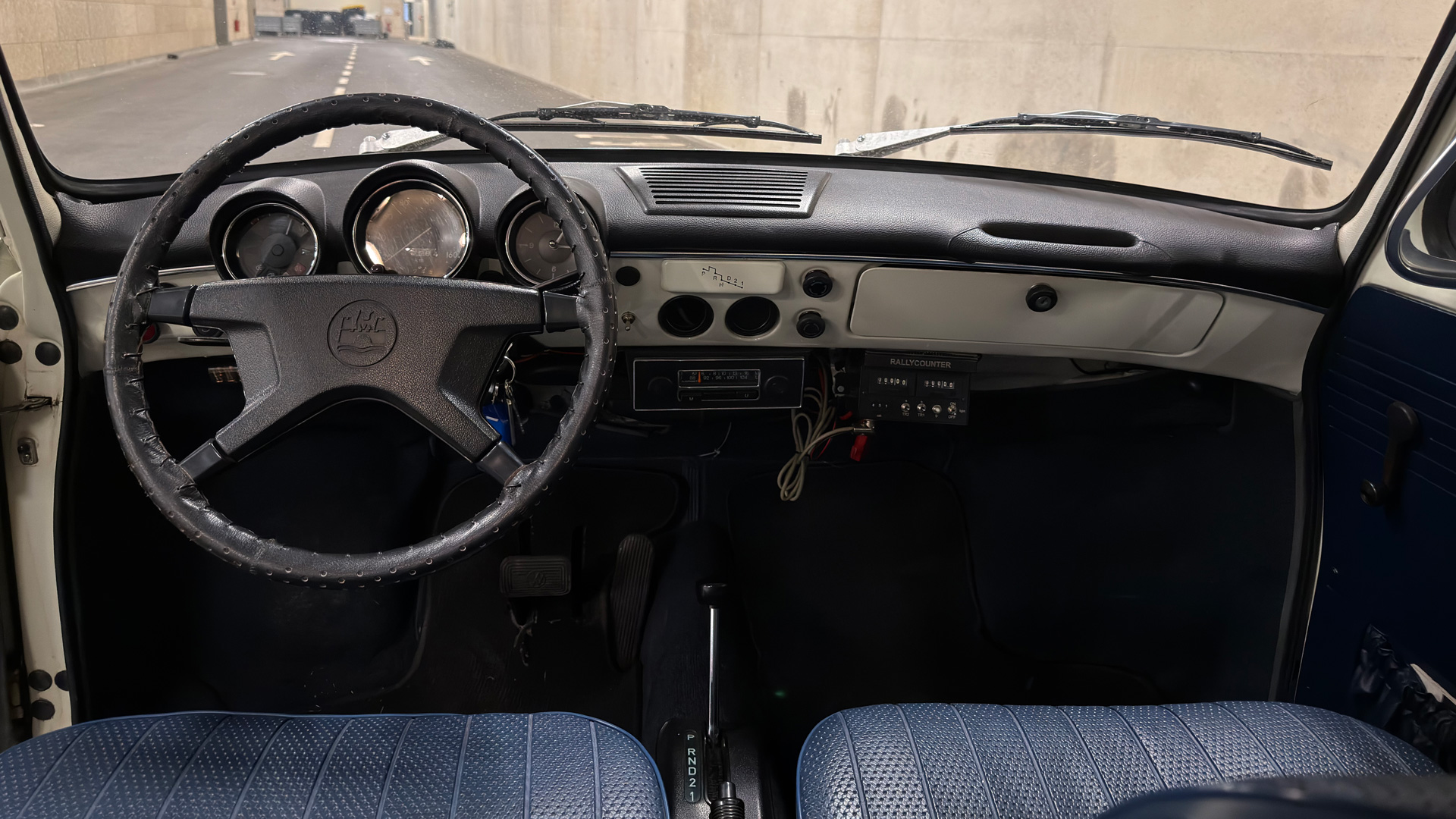
First Volkswagen with an automatic transmission
An important step was the introduction of a real automatic gearbox from the end of 1967.
For comparison:
• Beetle → only manual or semi-automatic gearbox
• Type 3 → first Volkswagen range to offer a full automaticThis option strengthened its attractiveness on the North American market.
-
Modernized bodywork
Compared to the Beetle, the Type 3 offered:
• more interior space,
• better sound insulation,
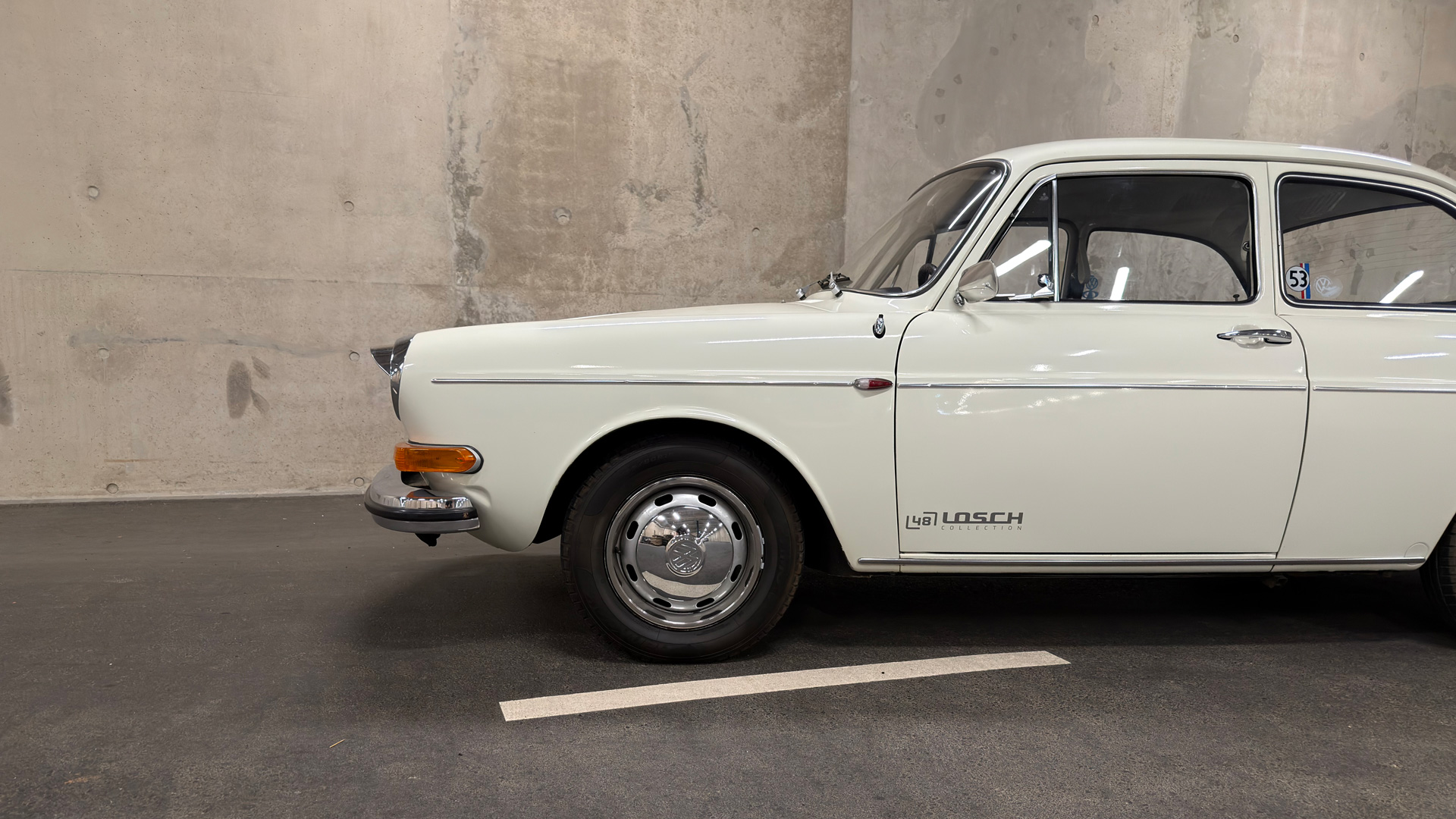
• a more modern exterior styling,
• Better road stability.It was the first Volkswagen model designed to offer a higher level of comfort.
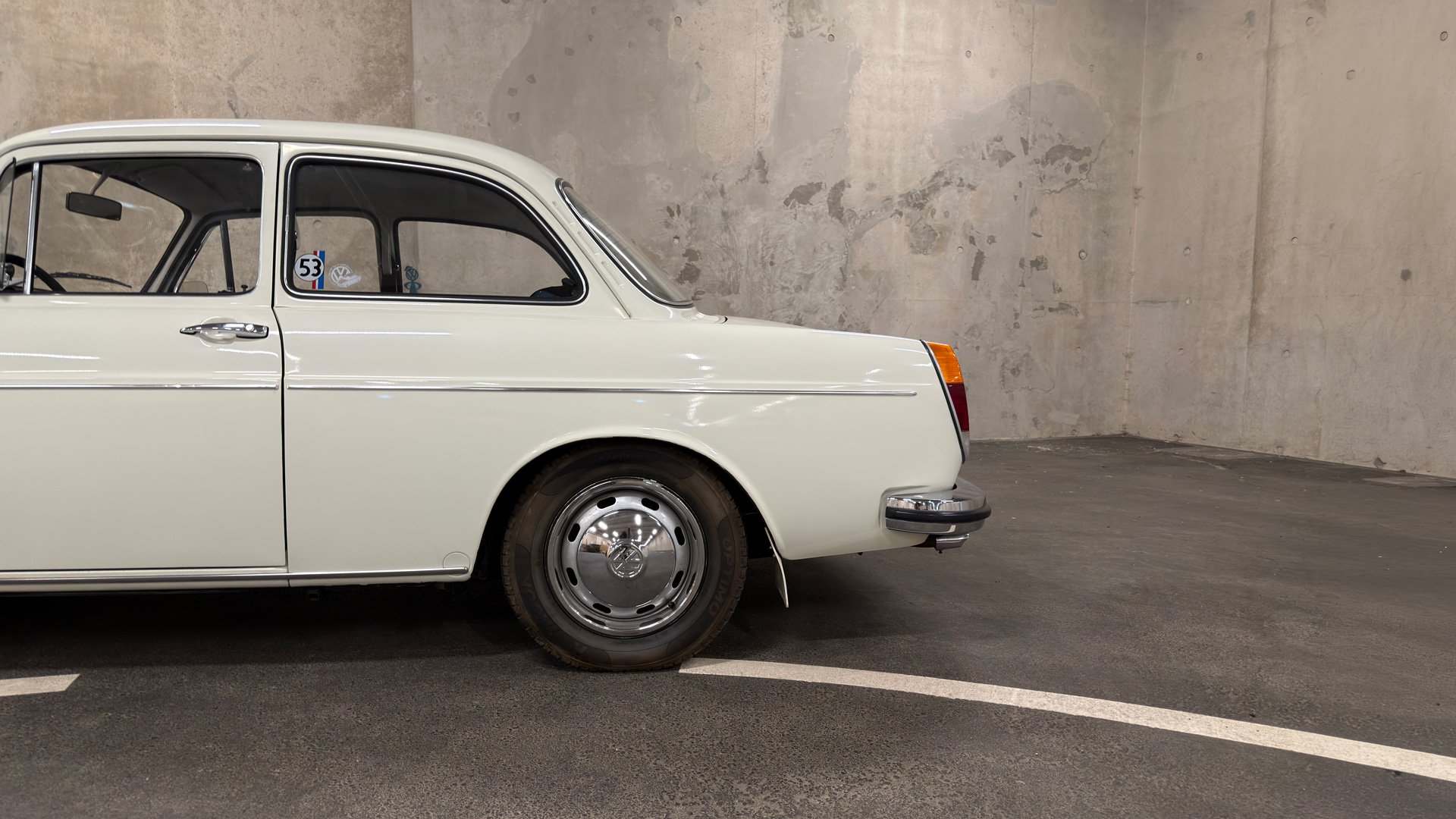
The VW Type 3 1600 (model year 1971)
1. Engine
The 1971 Model 1600 developed:
• 40 kW (54 hp)
• 1.6 liters of displacement
• Air-cooled four-cylinder boxer engine
This engine was one of the most popular in the range, offering significantly better performance than the first 1500 engines.
2. Technical developments and equipment
Around 1971, the Type 3 already benefited from many improvements, including:
• modernized electrical system ("Demilune" rear lights on later models),
• optimized ventilation,
• increased reliability of carburettor and injection systems,
• Safety updates (reinforced bodywork).
3. Tariff positioning
When it was launched, the Type 3 sedan cost around 3,300 euros (converted).
It was thus about 560 euros more expensive than a comparable Beetle – a clear positioning towards a more upscale category.
End of production and succession
Production of the Type 3 ended in 1973. Its place in the Volkswagen range was taken over a few years later by the Passat (from 1973), which imposed a new technical direction with its front engine and water cooling.
Importance of Type 3 today
The VW Type 3 is now considered to:
• an important step between the Beetle and the Passat,
• rarer than the Beetle, especially in original condition,
• technically simple but much more comfortable than the VWs of the 60s and 70s,
• a vehicle sought after by collectors, particularly in the Variant or TL versions.
Contact & Opening Hours
-
Losch Collection GRIDX
4-6 Rue des Trois Cantons
L-3980 Wickrange -
Contact
Phone: +352 56 79 32 8937
Email: Collection-Losch-UCBL@losch.lu -
Sales
Monday to Saturday: 9:00 – 12:00 & 13:00 – 18:00
Sunday: Closed